 newbusinessinside

Mechanical splices represent the most critical stress points across automated material handling installations. Although fasteners represent a tiny fraction of total equipment expenditure, their mechanical integrity dictates whether lines run smoothly or stop abruptly. Minor manufacturing variances in fastener geometry or tensile strength routinely cause premature joint separation and severe operational bottlenecks.
Continuous longitudinal tension subjects conveyor belting to dynamic strain as splices cycle around terminal pulleys thousands of times daily. An inconsistent fastener disrupts uniform load transfer between belt ends, concentrating tension into localized tear points that unravel the carcass. Specifying hardware from a dependable belt fastener manufacturer eliminates unpredictable splice behavior and protects expensive belting assets.
Selecting uniform components transforms mechanical lacing from a temporary patch into an engineered connection matching vulcanized service life. Consistency in wire diameter, clinch profile, and hook pitch ensures that every fastener shares operating stress equally. Following a systematic approach to how to choose the right belt fastener helps maintenance teams match fastener specifications to operating conditions and belt requirements. Without this precision, even premium belting suffers premature fatigue, tracking instability, and catastrophic splice rupture.
Mechanical Load Distribution Across the Splice Line
Splice mechanics depend fundamentally on equal load distribution across the complete width of the conveyor belt. Discrepancies as minor as a millimeter fraction in hook height cause individual fasteners to seat at unequal depths. Fasteners bearing disproportionate tension stretch or snap prematurely, initiating rapid cascade failures across adjacent hooks along the splice seam.
Carcass fabric yarns require precise, minimally invasive penetration during installation to maintain rated tensile limits. Irregular wire tips, burrs, or inconsistent leg angles sever structural warp fibers rather than displacing them cleanly during clinch operations. Cut carcass fibers significantly reduce joint pull-out resistance under regular operating loads, accelerating belt carcass delamination.
Angular alignment across the belt end must remain strictly perpendicular to the center line of travel. Uneven pitch spacing across a fastener strip pulls belt ends into an asymmetrical profile once the connecting pin enters. This induced camber forces the running belt off-track, causing edge curl and friction against conveyor frames.
Cascading Equipment Wear Caused by Dimensional Inconsistencies
Profile height directly dictates how smoothly a mechanical splice navigates conveyor structures and transfer points. Dimensional fluctuations that cause individual fastener crowns to stand above the belt surface create severe impact points. These elevated edges snag chutes and trip sensors, introducing unnecessary resistance throughout high-speed sorting lines.
Primary cleaners and secondary scrapers suffer severe blade damage whenever irregular fastener profiles pass the discharge pulley. Elevated hook loops strike scraper blades, knocking them out of alignment and gouging polyurethane elements. Damaged scrapers permit abrasive material carryback to accumulate on return idlers, triggering persistent belt mistracking and premature roller failure.
Terminal pulleys and drive drums endure localized abrasion when uneven fasteners pass continuously over lagging surfaces. Rubber pulley coatings develop severe gouges where proud fastener crowns exert concentrated point pressure. Over time, grooved lagging causes erratic belt traction, drive slippage, and increased energy consumption from drive motors.
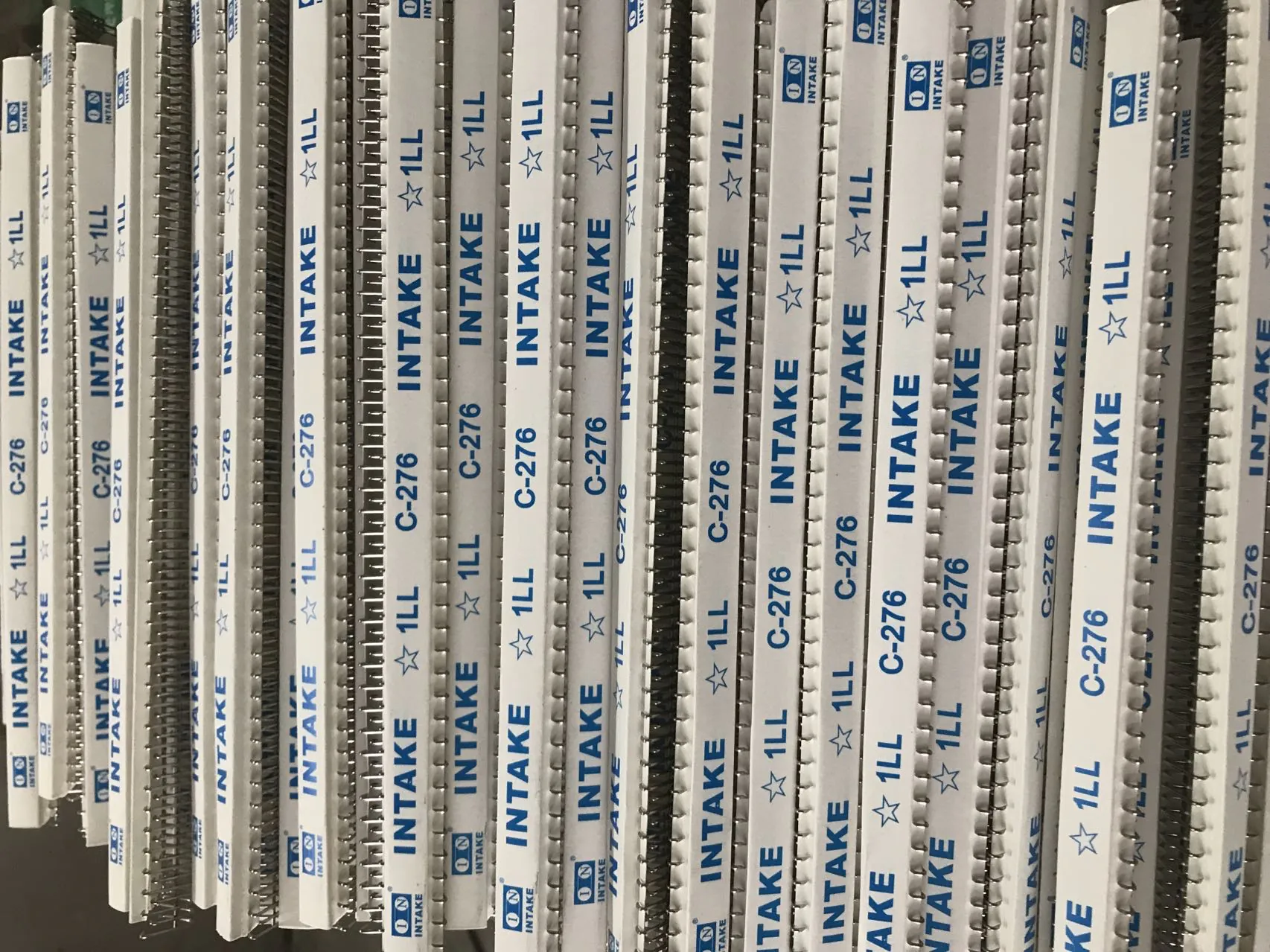
Rapid vibration through return idlers and snub rollers accelerates bearing degradation across conveyor runs. Fastener thickness variations generate repetitive acoustic pounding and shock waves as the splice cycles through support rollers. Deploying precision-manufactured Intake belt fasteners maintains a flush, low-profile joint that rolls quietly across idlers without imparting destructive shock to bearings.
Metallurgical Uniformity Under Continuous Cyclic Stress
Flexural fatigue develops rapidly as mechanical fasteners wrap repeatedly around small-diameter drive and take-up pulleys. Inconsistent steel annealing or variations in wire drawing create erratic tensile properties across a fastener strip. Under-tempered hooks crack abruptly under shock loads, whereas overly soft fasteners deform and allow hinge pins to migrate.
Harsh operating environments amplify minor metallurgical discrepancies, causing accelerated localized corrosion across mechanical splices. Variations in alloy composition or inconsistent galvanizing thickness create galvanic micro-cells between adjacent fastener loops. In wet food processing, chemical recycling, or industrial laundering facilities, corrosion pits weaken fastener cross-sections until loops snap under regular working tension.
Strict wire-drawing tolerances and verified metallurgy ensure continuous grain structure along critical hook bends. Partnering with an experienced belt fastener manufacturer guarantees that each batch adheres to defined tensile strength, hardness, and elongation metrics. Uniform metallurgy enables engineering teams to accurately project maintenance intervals rather than reacting to unpredictable joint snaps.
Operational Economics and Downtime Mitigation
Unscheduled downtime generates massive financial losses across continuous manufacturing, parcel distribution, and bulk processing operations. When an inconsistent fastener gives way, sorting lines halt instantly, backing up upstream queues and idling facility personnel. The trivial savings gained by purchasing low-cost, unverified fasteners vanish within minutes of an unexpected emergency outage.
Standardized fastener dimensions dramatically improve installation speed and repeatable clinch quality during routine maintenance. Service technicians working with uniformly collated strips set applicator tools once and achieve identical clinch depths across the entire belt width. Integrating engineered Intake belt fasteners simplifies technician training and eliminates manual realignment during critical belt changeovers.
Modern high-speed parcel hubs and automated sorting conveyors impose stringent demands on splice reliability, often exceeding speeds of three meters per second. Fastener dimensional uniformity ensures that joints negotiate tight nose bars and small pulleys without snagging. Procuring certified components from a reputable belt fastener manufacturer guarantees that splices withstand severe operating cycles without premature fatigue.
Precision mechanical hardware ultimately functions as an operational insurance policy for the entire conveyor system. Facilities that specify high-tolerance Intake belt fasteners avoid unexpected joint rupture, stabilize belt tracking, and extend the working lifespan of expensive belting carcasses. Consistent fastener quality safeguards production throughput, protects peripheral hardware, and delivers predictable, long-term conveyor performance.