 newbusinessinside
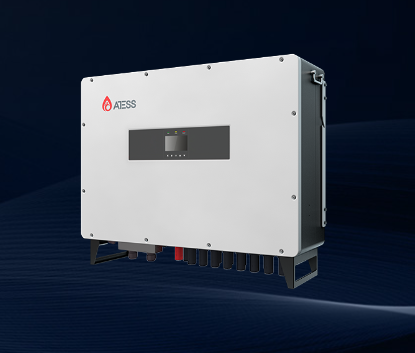
Power systems in commercial and industrial settings face different demands than residential setups; they often require backup readiness, peak shaving, and flexible load management. A hybrid inverter addresses these by combining solar conversion, battery control, and grid interaction inside a single enclosure. Atess designs their equipment to cover these roles without the external chargers or transfer switches that a traditional inverter setup typically needs.
Backup Power and Grid Independence
A traditional grid-tied inverter shuts down during utility outages to prevent islanding, leaving the site without power even when solar modules are generating. A hybrid inverter from Atess stays operational by isolating from the grid and switching to off-grid mode within 10 milliseconds. During an outage, the Solar Inverter with Battery draws from stored energy and available solar input to keep protected loads running. This fast transition helps avoid process interruptions, data loss, and equipment reset cycles that often follow unexpected blackouts.
Energy Storage and Self-Consumption
Without storage hardware, a conventional inverter exports surplus solar to the grid, which may yield lower returns than on-site consumption. A hybrid inverter redirects excess photovoltaic output to a battery bank instead, allowing facilities to store midday generation for evening demand spikes. Atess builds their Solar Inverter with Battery platform with multiple MPPTs and programmable working modes, so operators can prioritize self-consumption, time-of-use shifting, or backup charging without swapping components. The flexible battery voltage support also simplifies pairing with different storage chemistries.
System Architecture and Future Scaling
Traditional setups often need separate PV inverters, battery inverters, and external controllers, which adds wiring complexity and limits expansion paths. Atess supplies a Solar Inverter with Battery range that starts at 5 kW and scales to 150 kW per unit, with selected models paralleling up to 1200 kW. This integrated approach streamlines procurement, commissioning, and future capacity increases because the core hardware already coordinates solar, storage, and grid ports from a single control interface.
Comparing the two approaches reveals clear operational differences in backup capability, storage integration, and site scalability. Atess packages these functions in a hybrid inverter architecture that handles power conversion, battery management, and fast grid switching through one coordinated platform. For C&I projects where downtime carries high cost and energy flexibility matters, the single-device path can simplify both initial installation and long-term operation.