
 newbusinessinside
Digital dentistry has made it possible for clinics and laboratories to produce accurate physical models directly from digital patient data. However, achieving reliable results with dental 3D printing requires more than choosing a high-quality machine. Printing parameters, material selection, and model preparation all influence the final accuracy of printed dental models.
Among these factors, print orientation plays an important role. The position of a model on the build platform affects layer formation, support structure requirements, surface quality, and dimensional accuracy. For professionals using a dental model 3D printer, understanding orientation strategies is essential for producing consistent results.
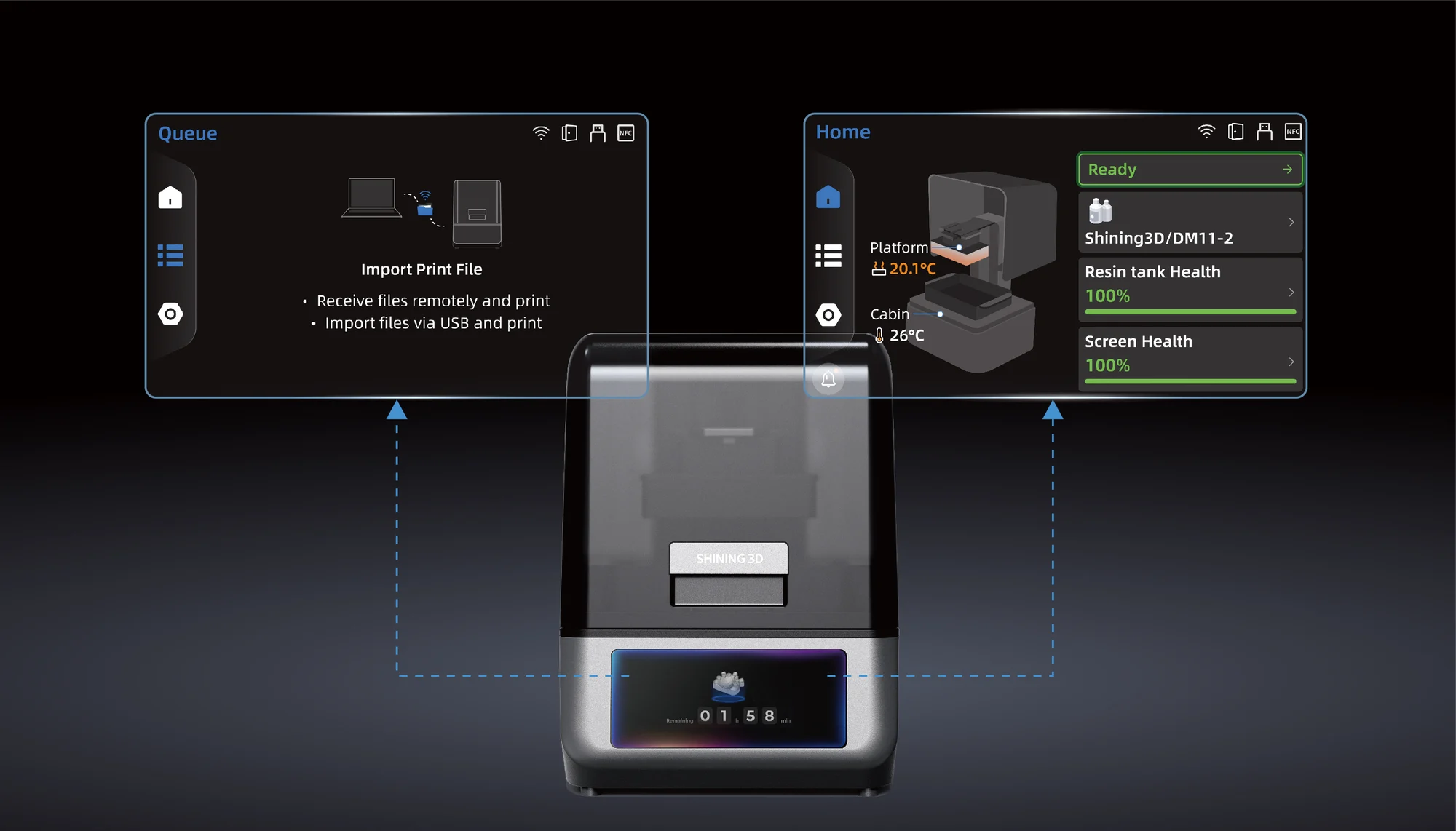
SHINING 3D Dental’s AccuFab-Aris is designed to support digital dental workflows, including dental model production, surgical guides, restorations, dentures, and splints. With optimized printing technology and workflow integration, it helps dental professionals achieve reliable results for different applications.
Why Print Orientation Matters in Dental Model 3D Printing?
In dental model 3D printing, orientation refers to how a digital model is positioned on the printer’s build platform before manufacturing begins. A model can be placed horizontally, vertically, or at an angled position depending on the design requirements.
The chosen orientation affects how each layer is formed during printing. Different positions can change the number of layers, support requirements, surface appearance, and the way forces affect the printed structure.
Research on dental 3D printing has shown that printing orientation can influence dimensional accuracy, surface quality, production time, and material usage. Selecting an appropriate orientation can help improve accuracy while reducing unnecessary supports and printing challenges.
Why Dental Models Require Careful Orientation?
Dental models contain complex anatomical details, including tooth contours, margins, and occlusal surfaces. Even small dimensional changes can influence how accurately a model represents the original digital design.
For applications such as orthodontic analysis, implant planning, and restoration evaluation, accurate reproduction is essential. Therefore, a 3D printer for dental models should be combined with proper orientation strategies to achieve predictable outcomes.
How Print Orientation Influences Dental Model Accuracy?
- Effect on Layer Formation
Resin-based 3D printers create objects by curing material layer by layer. The orientation determines how many layers are needed and how each surface is built.
When a dental model is positioned vertically, some areas may require more layers compared with horizontal placement. More layers can increase production time and may influence surface characteristics.
A horizontal orientation may reduce the number of layers, but it can also increase the size of each printed cross-section. This may affect support requirements and the way the printer handles complex anatomical structures. Choosing the right balance helps a dental model printer produce accurate results while maintaining workflow efficiency.
- Effect on Surface Detail
Dental models often require clear reproduction of fine features, especially around tooth surfaces and gingival areas. Print orientation can influence how these details appear after manufacturing.
Angled orientations are commonly used because they can reduce the impact of layer stepping on curved surfaces. By adjusting the angle, technicians can position important details in a way that improves surface quality.
For a dental model 3D printer, optimizing orientation helps ensure that critical anatomical areas receive appropriate printing conditions.
- Effect on Support Structures
Support structures are necessary for many resin printing applications because they help stabilize overhanging areas during production. However, excessive supports can increase material consumption and may leave marks on the printed surface.
The orientation of a dental model directly affects where supports are placed and how much support material is needed.
A well-planned orientation can:
- Reduce unnecessary support structures
- Protect important anatomical surfaces
- Simplify post-processing
- Improve production efficiency
This makes orientation planning an important step before starting dental model 3D printing.
Common Print Orientation Strategies for Dental Models
- Horizontal Orientation
Horizontal placement positions the model closer to the build platform. This approach can reduce printing height and may shorten production time.
Advantages include:
- Fewer layers
- Faster production cycles
- Efficient platform usage
However, horizontal printing may require careful support placement to prevent distortion or damage to important surfaces.
- Vertical Orientation
Vertical placement increases the height of the model and changes the layer direction.
Potential benefits include:
- Reduced footprint on the platform
- Better use of build space
- Possible improvement for specific anatomical details
However, increased printing height may require more layers and longer production time.
- Angled Orientation
Angled positioning is commonly used in dental applications because it provides a balance between surface quality, support requirements, and production efficiency. By rotating a model at an appropriate angle, technicians can reduce large cross-sectional areas and improve support distribution. For complex dental models, angled orientation is often considered during digital preparation to achieve better overall results.
Optimizing Dental Model Printing With Digital Workflow Tools
Successful dental printing depends on both equipment performance and digital preparation. Modern workflows use software tools to analyze model placement, generate supports, and optimize printing parameters.
A capable 3D printer for dental models should work together with digital preparation software to simplify orientation selection and improve production consistency.
SHINING 3D Dental’s digital workflow supports the connection between design preparation and printing. The AccuFab-Aris integrates with SHINING’s digital ecosystem, including workflow features that support automatic nesting, orientation, and slicing preparation.
Considering Application Requirements
The best orientation depends on the purpose of the printed model.
For example:
- Diagnostic models may prioritize surface detail and dimensional accuracy.
- Surgical guide models may require precise reproduction of planned structures.
- Orthodontic models may focus on tooth anatomy and occlusal relationships.
Understanding the final application helps technicians select the most suitable orientation strategy.
SHINING 3D Dental AccuFab-Aris for Dental Model Production
SHINING 3D Dental provides digital manufacturing solutions designed for modern dental practices and laboratories. The AccuFab-Aris is a professional dental 3D printer that supports applications including models, surgical guides, restorations, dentures, and splints.
The printer features a 4K high-resolution LCD system with 34 μm precision, helping produce detailed dental applications. It also includes features such as automatic leveling, a thermostatic build platform, and intelligent detection functions designed to improve workflow reliability.
For professionals producing dental models, combining a reliable printer with proper orientation planning can help improve accuracy and reduce unnecessary adjustments.
Practical Tips for Better Dental Model Printing Results
- Review Critical Areas Before Printing
Before manufacturing, technicians should identify important areas such as tooth surfaces, margins, and anatomical details. These areas should be positioned carefully to protect accuracy.
- Balance Accuracy and Efficiency
The most accurate orientation is not always the fastest option. Dental teams should consider both production requirements and final application needs.
- Test and Standardize Workflows
Different models may require different orientation settings. Establishing tested workflows can help improve consistency across repeated cases.
Conclusion
Print orientation has a significant influence on dental model accuracy, surface quality, support requirements, and production efficiency. For professionals using a dental model 3D printer, proper orientation planning is an essential step in achieving reliable digital manufacturing results.
A well-designed 3D printer for dental models, combined with optimized software preparation and appropriate printing strategies, allows clinics and laboratories to produce accurate dental models more efficiently. With solutions such as SHINING 3D DENTAL‘s AccuFab-Aris, dental professionals can integrate advanced 3D printing technology into modern digital dentistry workflows.